Meta Description: Master the best generative AI tools for graphic designers in 2026. Compare Adobe Firefly, Midjourney, and Canva to automate your workflow and scale creativity.
The landscape of graphic design in 2026 is no longer defined by the tools you use, but by the “Design Ops“ you orchestrate. Generative AI has evolved from a novelty feature into a fundamental neural engine that powers everything from initial mood boarding to final print-ready production. For the modern designer, the challenge has shifted from “How do I make this?” to “Which AI engine handles this specific intent best?”
In this guide, we break down the high-octane intelligence gathered from the current SERP landscape to give you a definitive look at the generative AI tools that are actually moving the needle for professionals this year.
The State of Design in 2026: From Prompting to Orchestrating
If 2024 was the year of the “cool prompt,” 2026 is the year of the “Integrated Workflow.” The industry has moved beyond isolated image generation toward Unified Intelligence. We are seeing a massive shift where AI-native typography and layout logic are finally catching up to the raw power of diffusion models.
For professional designers, “Prompt Fatigue” is a real pain point. The goal now is consistency—specifically Style Consistency and Character Consistency. You don’t just need an image; you need an asset that fits into a pre-existing design system without three hours of manual color-matching.
Top Industry-Standard Generative AI Tools
1. Adobe Firefly 3: The Production Workhorse
Adobe Firefly remains the gold standard for B2B and agency work for one primary reason: Commercial Safety. Unlike many “black box” models, Firefly is trained on Adobe Stock and licensed content, providing legal indemnification that is non-negotiable for enterprise-level clients.
-
Key Feature: Generative Fill & Expand in Photoshop, which has become a daily utility for extending canvases and seamless object removal.
-
Best For: Production-heavy workflows, client-ready assets, and vector recoloring.
-
Pros: Deep integration with Creative Cloud; commercially safe; handles text-in-image with high reliability.
-
Cons: Less “artistic” flair than Midjourney; requires a Creative Cloud subscription.
2. Midjourney v7: The King of Aesthetic Intelligence
Midjourney continues to dominate the creative direction phase. With the release of v7, the “Style Reference” (--sref) and “Character Consistency” (--cref) parameters have become indispensable for branding designers who need to maintain a look across an entire campaign.
-
Key Feature: Vibe-based Generation. Midjourney understands lighting, texture, and cinematic composition better than any other engine.
-
Best For: Ideation, moodboarding, and high-fidelity concept art.
-
Pros: Unmatched aesthetic quality; powerful web interface (moving away from Discord dependency).
-
Cons: No native vector output; legal provenance of training data is still a gray area for some corporate legal teams.
3. Canva Magic Studio: Speed at Scale
Canva has successfully bridged the gap between professional designers and non-design stakeholders. Its Magic Studio is built for Velocity. In 2026, it is the go-to tool for social media managers and marketing teams who need to turn a single concept into fifty platform-specific assets in minutes-
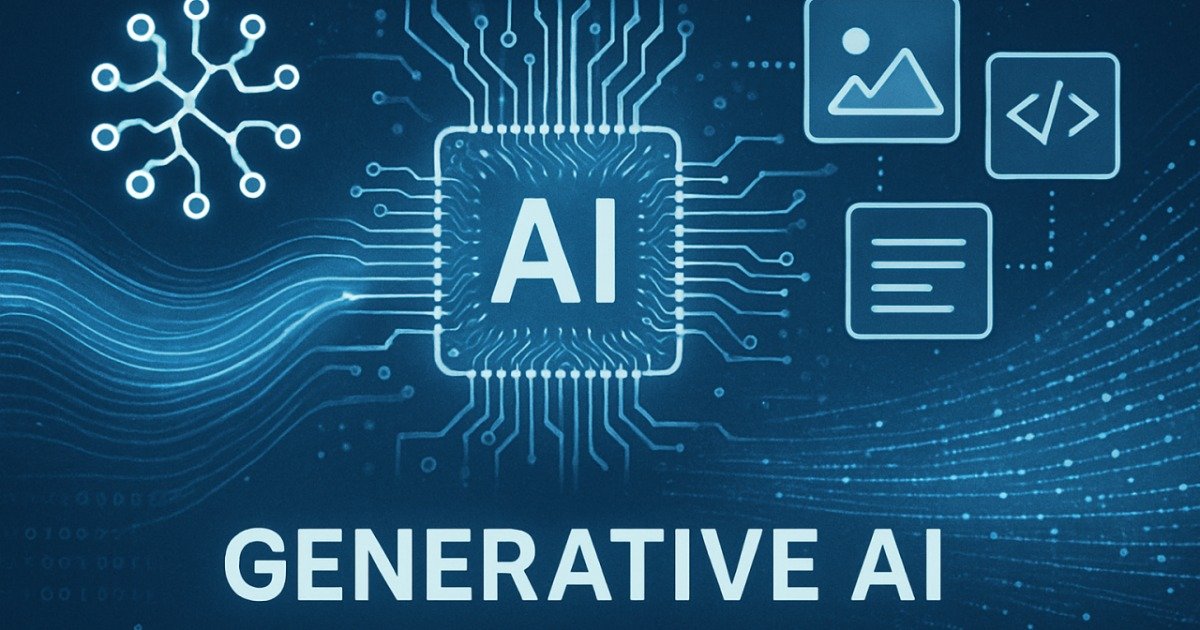
Generative AI tools for graphic designers.
-
Key Feature: Magic Switch. Automatically reformat a presentation into a blog post, an Instagram story, and a LinkedIn carousel.
-
Best For: Social media content, templated design, and SMB marketing.
-
Pros: Extremely low learning curve; all-in-one platform for design and publishing.
-
Cons: Limited customization for high-end “bespoke” branding; “Canva-look” can feel repetitive.
The Vector Frontier: AI Tools for Editable Graphics
One of the biggest “Gaps” in early AI was the inability to produce clean, editable paths. In 2026, several tools have conquered the Text-to-Vector challenge.
| Tool | Primary Strength | Output Format |
| Illustroke | Clean SVG icons and logos | SVG, EPS |
| Recraft | Professional branding kits and illustrations | SVG, Lottie (Animation) |
| CorelDRAW Vision AI | Turning sketches into production vectors | AI, PDF, SVG |
| Adobe Illustrator (AI Text-to-Vector) | Seamless path editing within the app | .AI |
For a freelance branding designer, Recraft has emerged as a favorite because it allows you to generate entire “Style Sets.” If you generate an icon in a specific hand-drawn style, Recraft ensures the next fifty icons you generate match that exact line weight and aesthetic.
UI/UX Specialization: The New Design Co-Pilots
The transition from static mockups to “Live Products” is where UI/UX AI tools shine. We are now seeing “Vibe Coding”—the ability to describe a UI and have the AI generate both the design and the React/Tailwind code.
-
Figma AI: The “Brain of the Industry.” It automates the drudgery—renaming layers, building components, and creating responsive auto-layouts. Its “Check Designs” feature acts as a linter, ensuring your work follows the brand’s design tokens.
-
Uizard (now part of Miro): Perfect for the “Sketch-to-Digital” workflow. Take a photo of a whiteboard drawing, and Uizard transforms it into a high-fidelity, interactive prototype.
-
Emergent: A full-stack AI platform that doesn’t just design screens; it designs systems. It reasons through user flows, ensuring that the “Back” button actually makes sense in the context of the user’s journey.
Decision Framework: Choosing Your AI Stack
To determine which tool you need, ask yourself these three questions:
1. What is the Final Output?
-
For High-End Raster Photography/Art: Midjourney or Flux 2.
-
For Scalable Logos/Illustrations: Adobe Illustrator (Text-to-Vector) or Recraft.
-
For Web/App Prototypes: Figma AI or Framer AI.
2. Who is the Client?
-
Enterprise/Corporate: Use Adobe Firefly. The “Commercially Safe” badge and IP indemnification are your best friends in a boardroom.
-
Small Business/Influencer: Use Canva or DALL-E 3. Speed and ease of use trump deep technical control.
3. What is the Workflow Stage?
-
Ideation/Brainstorming: Midjourney or ChatGPT (Plus).
-
Refinement/Editing: Photoshop (Generative Fill) or Nano Banana (Gemini Pro).
-
Handoff/Dev-Ready: Figma or Builder.io Fusion.
Expert Workflow: The “Agentic” Design Method (2026)
The most successful designers in 2026 use a Multi-Agent Architecture. They don’t just use one tool; they orchestrate a chain of AI “Agents.”
-
The Planner (ChatGPT/Claude): You feed the client brief to the AI. It breaks down the visual requirements, color psychology, and demographic targets.
-
The Visualizer (Midjourney): You use the Planner’s output to generate 10 distinct moodboards.
-
The Architect (Figma AI): You take the winning moodboard’s colors and “vibe” and let Figma generate the initial design tokens and wireframe.
-
The Technician (Photoshop/Firefly): You refine specific hero images, expanding backgrounds and fixing lighting using Generative Fill.
-
The Final Eye (Human): You curate, tweak, and ensure the “Soul” of the brand is intact.
Risks, Ethics, and the Copyright Reality
As of 2026, the legal landscape is clear: Pure AI output is generally not copyrightable.
The U.S. Copyright Office and international bodies have ruled that “Human Authorship” is required. To protect your work, you must prove Significant Human Control. This is why the “Agentic” workflow above is so important. By using AI as a tool at various stages—but providing the creative selection, arrangement, and manual refinement—you build a “Copyrightable” work.
Warning: Be wary of tools that don’t disclose their training data. For high-stakes commercial projects, always opt for platforms like Firefly or Shutterstock AI that offer a transparent audit trail.
Entity Glossary
-
Diffusion Models: The math behind tools like Midjourney that turns “noise” into an image.
-
Generative Recolor: An Adobe feature that uses AI to swap entire color palettes across vector files instantly.
-
Inpainting: Replacing a specific part of an image (e.g., changing a person’s shirt).
-
Outpainting (Generative Expand): Adding content outside the original image frame to change the aspect ratio.
-
Latent Space: The “brain” of the AI where it stores concepts like “Blue,” “Dog,” and “Cyberpunk.”
-
SGE (Search Generative Experience): Google’s AI-powered search results that often summarize tool comparisons.
People Also Ask (FAQs)
1. Is Adobe Firefly better than Midjourney for professionals?
It depends on the goal. For commercial safety and integration into professional software like Photoshop, Firefly is better. For pure artistic quality, lighting, and creative imagination, Midjourney is still the undisputed leader.
2. Which AI tool generates editable vector files?
In 2026, the best tools for editable vectors are Adobe Illustrator’s Text-to-Vector, Recraft, and Illustroke. These output paths and nodes rather than flat pixel-based images.
3. Can I copyright AI-generated logos in 2026?
Generally, no, if the logo is only a prompt-to-image output. However, if you use AI to generate the concept and then manually refine the vectors, add unique typography, and make significant creative choices, you can likely claim copyright on the finished work.
4. Are there any free AI tools for graphic design beginners?
Yes. Canva offers a robust free tier for its Magic Studio features, and Microsoft Designer provides surprisingly capable AI design tools for free. Bing Image Creator (powered by DALL-E 3) is also a great starting point for beginners.
5. What is “Design Ops” in the context of AI?
Design Ops refers to the management of design processes and people. In 2026, it specifically involves managing AI governance, ensuring teams use “Safe” models, and maintaining a centralized “Prompt Library” to keep brand assets consistent across a global organization.
6. Does AI replace the need for a graphic designer?
No. It replaces the “production assistant” tasks. AI lacks the ability to understand deep human emotion, local cultural nuances, and complex brand strategy. Designers are evolving into Creative Directors who manage AI systems.
7. How do I avoid “AI-looking” designs?
The key is Post-Processing. Avoid using raw AI outputs. Use AI for the 80% of the work, but spend the final 20% on custom typography, unique color grading, and “manual” imperfections that give the work a human touch.
Conclusion
The “Best” tool isn’t the one with the most features; it’s the one that fits your specific Commercial Intent.
If you are an agency working with Fortune 500 companies, your stack should be built around Adobe Firefly and Figma AI for safety and system-level logic. If you are a solo freelancer focused on high-impact visual storytelling, Midjourney and Recraft will give you the edge you need to stand out.
Click here: 15 Best Ai Chrome………….