Meta Description: Choosing between DSLR vs Mirrorless in 2026? Learn which camera system is best for beginners, including costs, AI features, and long-term value.
In 2026, the question of whether to buy a DSLR or a Mirrorless camera has shifted from a debate about “specs” to a decision about your long-term creative future. While the core physics of light remains the same, how you interact with your camera has undergone a massive evolution.
For a beginner entering the world of photography or video, this choice is likely your most significant hurdle. Do you opt for the tried-and-true mechanical reliability of a DSLR, or do you step into the AI-driven, high-speed ecosystem of modern mirrorless systems?
In 2026, mirrorless cameras are the superior choice for most beginners due to real-time exposure preview and AI-driven autofocus. However, DSLRs remain the top choice for students on a strict budget who prioritize battery life and a vast market of affordable “legacy glass” lenses.
The Fundamental Difference: The Mirror vs. The Sensor
To understand which is better for you, we must look at the internal mechanics.
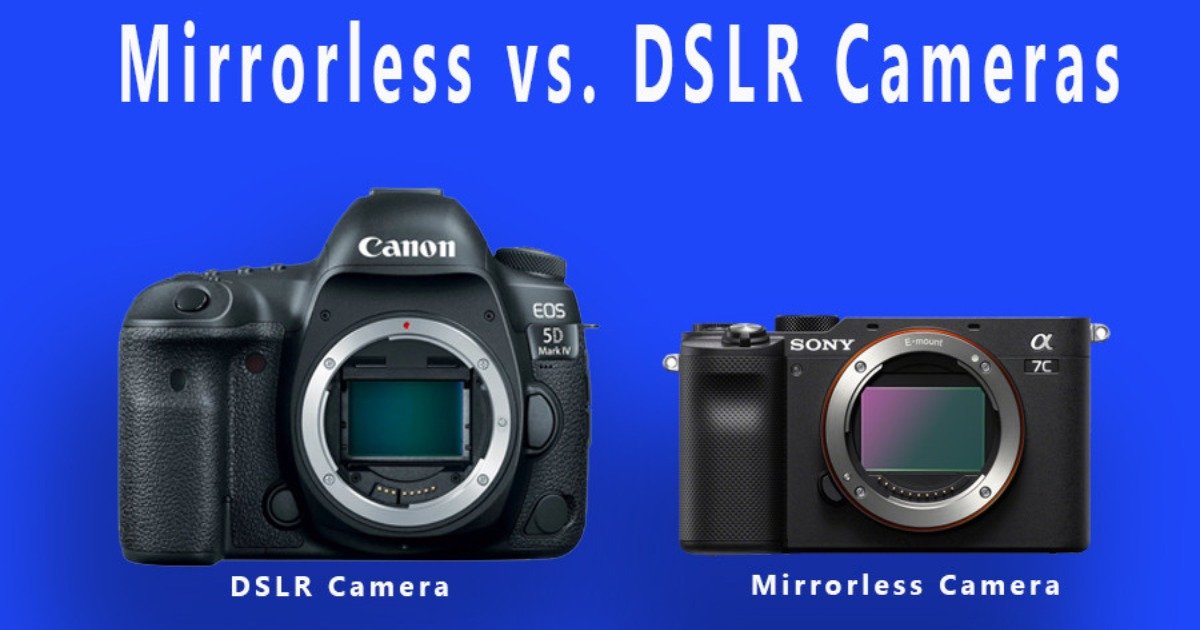
A DSLR (Digital Single-Lens Reflex) uses a physical “mirror box.” Light travels through the lens, hits a mirror, and is reflected upward through a pentaprism into an Optical Viewfinder (OVF). When you take a photo, the mirror flips up, the shutter opens, and the light finally hits the sensor-DSLR vs Mirrorless.
A Mirrorless camera removes this entire mechanical assembly. Light passes directly through the lens onto the image sensor, which stays “always on” to provide a digital live feed to either the rear LCD screen or an Electronic Viewfinder (EVF).
Why the “Flange Distance” Matters
By removing the mirror, manufacturers can place the lens much closer to the sensor. This is known as a shorter flange distance. For you, this means engineers can design smaller, sharper, and more optically stable lenses that weren’t physically possible in the DSLR era.
1. Comparison Matrix: Mirrorless vs. DSLR at a Glance
| Feature | DSLR (2026 Context) | Mirrorless (2026 Context) |
| Autofocus | Fast, but limited to center points. | AI-driven; tracks eyes, pets, & vehicles. |
| Viewfinder | Optical: Natural, lag-free, zero battery use. | Electronic: Shows exactly how the photo will look. |
| Size & Weight | Bulkier; built for ergonomics and large hands. | Compact; ideal for travel and vlogging. |
| Battery Life | 1,000+ shots per charge (industry leading). | 350–700 shots (requires USB-C charging). |
| Video Quality | Basic; often lacks 10-bit or high frame rates. | Professional; 4K60p, 10-bit, and AI stabilization. |
| Used Market | Massive; high-end lenses for $200–$400. | Growing; modern lenses are more expensive. |
2. The Beginner Learning Curve: Which is Easier?
The most common fear for a hobbyist is buying a camera that is “too complicated.” Interestingly, the more technologically advanced camera—the mirrorless—is actually the easier one to learn on.
The “What-You-See-Is-What-You-Get” Advantage
On a DSLR, you look through the glass. If your settings are wrong and the photo will be pitch black, the viewfinder still looks bright. You only see the mistake after you take the shot (a process called “chimping”).
Mirrorless cameras offer a Live Exposure Preview. If you change your shutter speed or aperture, the image in the viewfinder gets darker or brighter in real-time. This instant feedback helps beginners master the Exposure Triangle in days rather than months.
AI-Powered Autofocus
Modern mirrorless systems from Sony (E-mount), Canon (RF-mount), and Nikon (Z-mount) now include Deep Learning AI. Instead of you having to manually move a focus point over a subject’s eye, the camera recognizes the eye automatically—whether it belongs to a human, a dog, or a bird.
For a beginner, this “Face/Eye Priority” removes the frustration of blurry photos, allowing you to focus on composition and storytelling.
3. The Hybrid Creator: Photos vs. TikTok & YouTube
If your goal includes any form of content creation, the debate is essentially over: Mirrorless is the only logical choice.
-
Autofocus in Video: Mirrorless cameras use Phase Detection on the sensor, allowing for smooth, cinematic focus pulls. Most entry-level DSLRs struggle with “hunting” (the lens moving back and forth) when recording video.
-
Stabilization: Many mirrorless bodies now feature IBIS (In-Body Image Stabilization). This physically moves the sensor to counteract shaky hands, making your handheld vlogs look like they were shot on a gimbal.
-
Vertical Video: Newer models like the Sony ZV-E10 II or Canon R50 are designed with social media in mind, offering easy vertical interfaces and high-quality internal microphones.
4. The “Used Market” Strategy: When a DSLR Wins
If you have a strict budget of under $400, a used DSLR is your best entry point. Because the industry has shifted to mirrorless, “legacy” DSLR gear is currently at its lowest price point in history.
The Legacy Glass Advantage
You can buy a used Nikon D3500 or Canon Rebel T7 for a pittance, and then pick up professional-grade Canon EF or Nikon F lenses for a fraction of their original cost.
Pro Tip: You can actually adapt these old DSLR lenses to new mirrorless bodies later using a mount adapter (like the Canon EF-EOS R or Nikon FTZ II). However, you cannot put a new mirrorless lens on an old DSLR. This makes mirrorless the more “future-proof” investment.
5. Sustainability and Resale Value
When you buy a camera in 2026, you must think about 2028.
-
DSLR Resale: Prices are steadily declining. A DSLR bought today will likely have very little resale value in three years as the world moves fully to mirrorless mounts.
-
Mirrorless Resale: These systems are the current R&D priority. Firmware updates continue to add features to mirrorless cameras years after they are released, keeping them relevant and maintaining their value.
6. Decision Matrix: Which One Should You Pick?
Choose a Mirrorless if:
-
You want to shoot video, TikToks, or YouTube content.
-
You want the lightest gear for travel and hiking.
-
You want AI to help you with focusing.
-
You have a budget of $600 or more.
Choose a DSLR if:
-
You are a student on a very tight budget (<$400).
-
You are doing a specific photography course that requires an optical viewfinder.
-
You will be away from power for days (e.g., long-distance trekking) and need extreme battery life.
-
You prefer the “mechanical” feel and larger grip of a traditional camera.
7. Common Beginner Mistakes to Avoid
-
Buying the “Kit Lens” and Stopping: Most beginners use the 18-55mm lens that comes in the box. To see the true power of your camera, invest in a “Prime” lens (like a 50mm f/1.8).
-
Ignoring Shutter Count: If buying a used DSLR, always check the Shutter Count. Like mileage on a car, it tells you how much life is left in the physical mirror mechanism-DSLR vs Mirrorless. Mirrorless cameras are less susceptible to this because they can use an electronic shutter with no moving parts.
-
Forgetting Memory Card Speeds: In 2026, high-resolution video and fast burst rates require UHS-II SD cards. Using an old, slow card will make even the fastest camera feel sluggish.
People Also Ask (FAQs)
1. Is DSLR dead in 2026?
Not entirely. While major brands have stopped developing new DSLR models, millions of units are still in use professionally. They are “legacy” tech—functional and reliable, but no longer the cutting edge.
2. Can I use my old lenses on a new mirrorless camera?
Yes. Using an adapter (e.g., the Sony LA-EA5 or Canon EF-EOS R), you can use almost any DSLR lens on a mirrorless body, often with improved autofocus performance thanks to the new sensor.
3. Does mirrorless take “better” quality photos than DSLR?
Not necessarily. Image quality depends on the sensor and the lens. However, mirrorless makes it easier to get a high-quality photo because of the advanced autofocus and exposure previews.
4. Why are mirrorless batteries so much worse?
Because they have to power a high-resolution screen or viewfinder and a complex image sensor 100% of the time. A DSLR only uses power when the shutter clicks or the screen is on.
5. Which is better for low-light photography?
Mirrorless cameras generally win here because their viewfinders can “see” in the dark by boosting the digital signal, whereas a DSLR optical viewfinder stays dark if the environment is dark.
6. Are mirrorless cameras more fragile?
No, but the sensor is more exposed. When you take the lens off a mirrorless camera, the sensor is right there. On a DSLR, the mirror protects it. You just have to be more careful when changing lenses.
7. Which is better for sports and action?
Mirrorless. With electronic shutters, mirrorless cameras can shoot at 20–30 frames per second silently, whereas DSLRs are physically limited by how fast the mechanical mirror can flip up and down.
Conclusion
The “DSLR vs Mirrorless” debate is no longer about which camera is “better” in a vacuum—it is about which tool fits your lifestyle.
If you are a traditionalist who loves the tactile experience of a mechanical mirror and wants to save money on used gear, a DSLR is a fantastic, soul-filled way to learn. But for the vast majority of people—especially those who value video, travel portability, and the “cheat code” of AI autofocus—Mirrorless is the undisputed champion of 2026.
Read more: 7 Best Budjet Smart Watches……….